2026 Top Double Circuit Breakers Which One Is Best?

Time:2026-11-03 Author:Amelia
0%

Choosing a Double Circuit Breaker in 2026 is not simply a matter of picking the highest-rated model. The right option depends on the electrical panel, supply, intended load, and manufacturer-listed compatibility. Terminology can be confusing: “double” may refer to a two-pole breaker, but product designs and applications vary. Check the panel label and product documentation before comparing options. Details matter.

This guide will compare leading models using practical criteria, including current and voltage ratings, interrupting capacity, trip characteristics, construction, and available manufacturer support. It will also consider how clearly each product identifies its intended panel and use. A low price or familiar brand name can be appealing, but neither proves a breaker is suitable. Compatibility is essential.

The best choice is the one that matches the installation—not necessarily the one with the longest feature list. Recommendations should be checked against the latest manufacturer specifications, since product availability and details can change. This comparison cannot replace an inspection of your specific panel. Electrical work carries real risks, and installation or replacement should be handled by a qualified electrician. Even a careful guide has limits. Use the shortlist to ask better questions, then verify every rating and fit before making a decision.
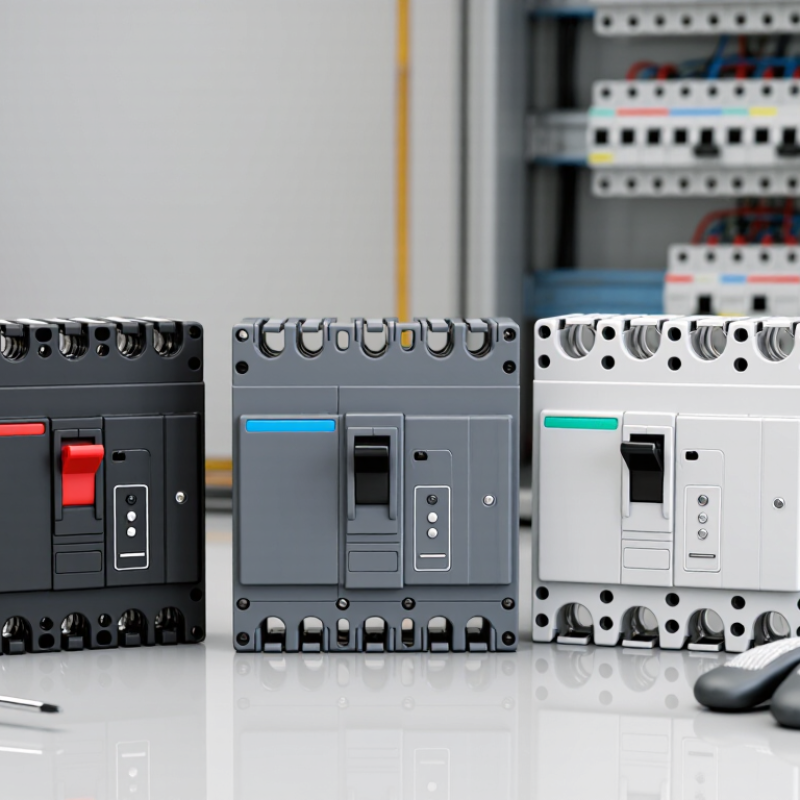
2026 Top Double Circuit Breakers Which One Is Best?

What Double Circuit Breakers Are and How They Work

2026 Top Double Circuit Breakers Which One Is Best?

A double-pole circuit breaker connects to two hot legs and opens both together when it trips. In a typical North American 120/240-volt split-phase panel, it can supply 240-volt equipment, such as a range or workshop compressor. Inside, thermal elements respond to sustained overloads; magnetic elements react rapidly to high fault current. The shared trip matters: both conductors disconnect, rather than leaving one energized. That distinction matters.

The terminology can be messy. A double-pole breaker is not the same as a tandem breaker, which fits two independent circuits into one panel position. Nor is a simple handle tie automatically equivalent to a listed common-trip device. Check the panel label and the appliance’s nameplate; the correct breaker depends on the panel, wiring, and load.

A breaker reduces specific electrical hazards, but it cannot prevent every fire. NFPA’s 2022 report, Home Fires Involving Electrical Failure or Malfunction, estimated 46,700 U.S. home fires annually from 2015 to 2019 involving electrical failure or malfunction. That figure covers many causes, not double-pole breakers alone. Selection and installation deserve care. A qualified electrician can verify compatibility, conductor size, and required protection, especially when an older panel has unclear labeling.

Key Ratings, Standards, and Panel Compatibility

A double-pole breaker must match the circuit’s voltage, conductor ampacity, and calculated load. Its ampere rating alone is not enough. Check the panel label for approved breaker types, maximum ratings, and permitted positions. Under NEC 110.3(B), listed equipment must be installed according to its instructions. UL 489 covers molded-case circuit breakers, including performance and safety requirements. The interrupting rating must also meet or exceed the available fault current at the panel. Small detail, big consequence.

NFPA’s 2021 Electrical Fires report estimated an annual average of 46,700 U.S. home structure fires involving electrical failure or malfunction from 2015 through 2019. That figure does not mean a breaker prevents every electrical fire, but it underlines why correct selection and installation matter. A licensed electrician can verify fault-current data and panel suitability; guessing from a product photo is unreliable.

Confirm whether the panel permits a full-size two-pole breaker in the intended spaces. Tandem breakers are not automatically interchangeable, even when they appear to fit. Check the bus connection, voltage rating, wire range, and terminal temperature rating against the panel documentation. For a 240-volt load, both poles must operate together as specified. Compatibility can be awkward. Don’t force a fit.

Leading Double Circuit Breaker Options for 2026

Leading double circuit breaker options for 2026 should be judged by fit, not appearance. A double-pole breaker serves two linked poles, commonly supplying 240-volt loads such as a water heater or workshop tool. Check the panel’s approved breaker type, conductor size, load, and required interrupting rating before comparing features. A handle tie alone is not always equivalent to a listed common-trip breaker. Small detail. It matters.

The International Energy Agency’s Electricity 2024 report projected global electricity demand growth averaging 3.4% annually from 2024 through 2026, increasing the importance of sound circuit planning. For protection context, the National Fire Protection Association reported an estimated 24,200 U.S. home electrical fires per year during 2015–2019. These figures do not prove that one breaker design prevents every hazard; installation and system condition matter too. For a 2026 shortlist, compare thermal-magnetic protection, clearly marked ratings, and compatibility with the existing panel. Where a circuit needs ground-fault or arc-fault protection, verify the required device type rather than assuming a standard double-pole breaker provides it. That’s easy to overlook. A qualified electrician can confirm fit and load calculations; panel labels can be incomplete or outdated.

How to Compare Safety, Performance, and Value

When comparing double circuit breakers, start with the electrical panel, not the price tag. Check that the breaker type is approved for that exact panel and matches the circuit’s voltage and amperage. A neat fit is not proof of compatibility. The panel label and product documentation matter.

Safety comes down to correct ratings and reliable protection. Compare the breaker’s interrupting rating with the available fault current, and confirm its intended application. For a shared-neutral circuit, verify that the setup provides the required simultaneous disconnection. Small details matter. If the panel information is unclear, ask a licensed electrician to assess it before buying. Guessing is not a shortcut.

Performance and value involve more than switching capacity. Look for clear test documentation, durable terminals, and specifications that match the load. Consider expected service life and replacement availability alongside the upfront cost. A low-priced unit may cost more if it fits poorly or needs early replacement. Yet higher cost alone does not guarantee better protection. This comparison can feel frustrating; specifications are easy to overlook when products look nearly identical. Check the details, and leave installation to a qualified professional when you are unsure.

2026 Top Double Circuit Breakers Which One Is Best? - How to Compare Safety, Performance, and Value

Comparison scope: This table compares common two-pole breaker types for North American electrical systems. A two-pole breaker connects to two circuit poles and is commonly used for 240 V loads; the actual voltage, current rating, approved use, and availability depend on the breaker label, panel, and local electrical code.

Breaker Type Main Protection Typical Applications Safety and Performance Compatibility Checks Value Consideration
Standard two-pole thermal-magnetic Trips when current exceeds its rated limit for long enough, or when a high-current short circuit occurs. Dedicated 240 V loads such as some ranges, water heaters, and air-conditioning equipment, when specified by the equipment instructions. Provides overcurrent protection and disconnects both poles together. It does not, by itself, provide ground-fault or arc-fault protection. Match the breaker type to the panel label; verify the equipment, conductor, and circuit ratings. Use only a listed breaker approved for that panel. Often the simplest and lowest-cost choice where additional protection is not required by the installation or local code.
Two-pole GFCI Provides overcurrent protection and ground-fault protection by detecting an imbalance between current leaving and returning through the monitored conductors. Some 120/240 V equipment and locations where ground-fault protection is required or specified, such as certain outdoor or wet-location circuits. Can reduce shock risk from certain ground-fault conditions. It does not replace grounding, bonding, or correct wiring. Check the breaker’s wiring diagram and neutral requirements. GFCI requirements depend on the equipment, location, and applicable code edition. Can be a practical choice when GFCI protection is needed at the circuit. Added cost and possible nuisance trips should be considered.
Two-pole AFCI Provides overcurrent protection and detects certain hazardous arc-fault signatures that may not produce enough current to trip a standard breaker promptly. Applicable branch circuits where arc-fault protection is required and a listed two-pole AFCI is available for the panel and circuit. Adds protection against certain arcing conditions. It is not a substitute for GFCI protection where GFCI is required. Confirm the panel listing, circuit configuration, neutral arrangement, and local code requirements; AFCI availability varies by system. Useful when AFCI protection is required or desired, but compatibility and installation requirements can limit options.
Two-pole dual-function AFCI/GFCI Combines overcurrent protection with arc-fault and ground-fault protection in one breaker, where a listed configuration is available. Circuits that need both AFCI and GFCI protection, provided the breaker is approved for the panel and suitable for the circuit. Offers multiple protection functions in one device. Correct installation and following the manufacturer’s wiring instructions are essential. Verify the exact panel compatibility, neutral connections, circuit type, and required ratings. Not every panel or two-pole circuit has a compatible model. May avoid separate protective devices, but typically costs more than a standard breaker and may not be available for every application.
Tandem / twin breaker Contains two independent single-pole breakers in one physical space; it is not inherently a two-pole breaker. Adding permitted single-pole circuits in panel positions specifically rated for tandem breakers. The two handles usually operate separate circuits and do not provide the common disconnect required for many 240 V loads. Use only in panel positions marked for tandem breakers. Confirm the panel diagram and circuit requirements; do not treat it as a two-pole breaker unless specifically listed for that use. Can save panel space where permitted, but it is not a substitute for a correctly rated two-pole breaker.

Choosing the Best Breaker for Your Electrical System

Choosing the best double circuit breaker starts with identifying what “double” means. A two-pole breaker serves a 240-volt circuit, while a tandem breaker fits two circuits into one panel position. They are not interchangeable. Check the panel’s labeling, circuit voltage, required amperage, and conductor size before comparing options. The breaker must be listed for that specific panel.

Safety depends on more than fit. NFPA’s Home Electrical Fires report estimated 24,200 U.S. home electrical fires annually from 2015 to 2019, causing 295 civilian deaths and about $1.2 billion in direct property damage. A breaker cannot prevent every electrical fire, but correct overcurrent protection matters. Match its interrupting rating to the available fault current, and check whether the circuit requires ground-fault or arc-fault protection. When uncertain, have a qualified electrician verify the panel and load.

Look closely at the actual circuit. A large appliance may need a dedicated two-pole breaker; adding a tandem breaker simply because a panel looks crowded can be the wrong fix. Panel schedules are sometimes outdated, too. That detail gets missed. Record the circuit, confirm the manufacturer’s permitted breaker types, and avoid guessing from appearance. A tidy label helps, but it does not prove compatibility.

FAQS

What should I check before choosing a double-pole breaker?

Match its voltage, ampere rating, conductor size, and calculated load to the circuit. Check the panel label and instructions. Looks can mislead.

Is the breaker’s ampere rating enough to confirm compatibility?

No. The breaker must be approved for the specific panel and permitted position. Its interrupting rating must also meet or exceed the available fault current.

Can I use a tandem breaker instead of a full-size double-pole breaker?

Not automatically. Confirm that the panel allows that breaker type in the intended spaces. A similar shape does not prove compatibility.

Does a handle tie always provide the same protection as a common-trip breaker?

No. A handle tie is not always equivalent to a listed common-trip breaker. Verify the device required for the circuit.

What does a double-pole breaker typically supply?

It commonly serves a 240-volt load, such as a water heater or workshop tool. Both poles must operate together as specified.

What should I compare besides price?

Check ratings, terminal details, test documentation, expected service life, and replacement availability. A higher price alone proves little. That’s easy to miss.

Does a standard double-pole breaker provide ground-fault or arc-fault protection?

Do not assume it does. Check whether the circuit requires a specific protection device, then confirm its compatibility with the panel.

What if the panel label is unclear or outdated?

Ask a licensed electrician to verify the panel, load calculations, and fault-current information. I’d double-check rather than guess. It can be frustrating.

Conclusion

This guide explains what a Double Circuit Breaker is, how it works, and why its ratings matter when selecting equipment for an electrical panel. It outlines key considerations such as current and voltage ratings, applicable safety standards, and compatibility with the panel, helping readers understand how these factors affect safe and reliable operation.

The article also compares leading types of double circuit breakers for 2026 and offers a practical way to assess safety, performance, and value. Rather than focusing on a single option, it helps readers match a breaker to their system’s requirements, installation conditions, and intended use. By weighing these considerations together, readers can make a more informed choice and identify when they should consult a qualified electrical professional.


Amelia

Amelia

Amelia is a seasoned marketing professional with a wealth of expertise in our company’s core offerings. With an unwavering passion for driving growth and innovation, she plays a pivotal role in shaping our marketing strategies and enhancing brand visibility. A key aspect of her responsibilities......