China’s electrical-control industry is entering 2026 with stronger demand for measurable energy management. The International Energy Agency’s Electricity 2024 report projects global electricity demand to grow by about 4% annually through 2026. That growth increases interest in Time Controlled Switches for lighting, pumps, signage, heating, and ventilation.
China’s National Energy Administration reported that national electricity consumption reached approximately 9.85 trillion kilowatt-hours in 2024. It also recorded year-on-year growth of about 6.8%. These figures suggest a practical need for reliable scheduling, especially in factories, commercial buildings, and public facilities. A switch installed beside a distribution cabinet can prevent overnight lighting, reduce operating waste, and simplify maintenance routines.
This guide evaluates China’s top 10 Time Controlled Switches manufacturers for 2026. The selection considers product range, timing accuracy, relay capacity, certifications, factory experience, export capability, and after-sales support. References include IEC 60669 requirements for switches used in household and similar fixed electrical installations. Company claims still require verification.
That matters.
Manufacturers may publish impressive specifications, while actual performance depends on wiring, load type, temperature, and installation quality. Some rankings may also change as supply chains and certifications develop. Therefore, this overview should support supplier screening, not replace technical testing or professional procurement review. Readers should request current datasheets, sample units, warranty terms, and compliance documents before placing orders. A dependable supplier is not always the cheapest one.
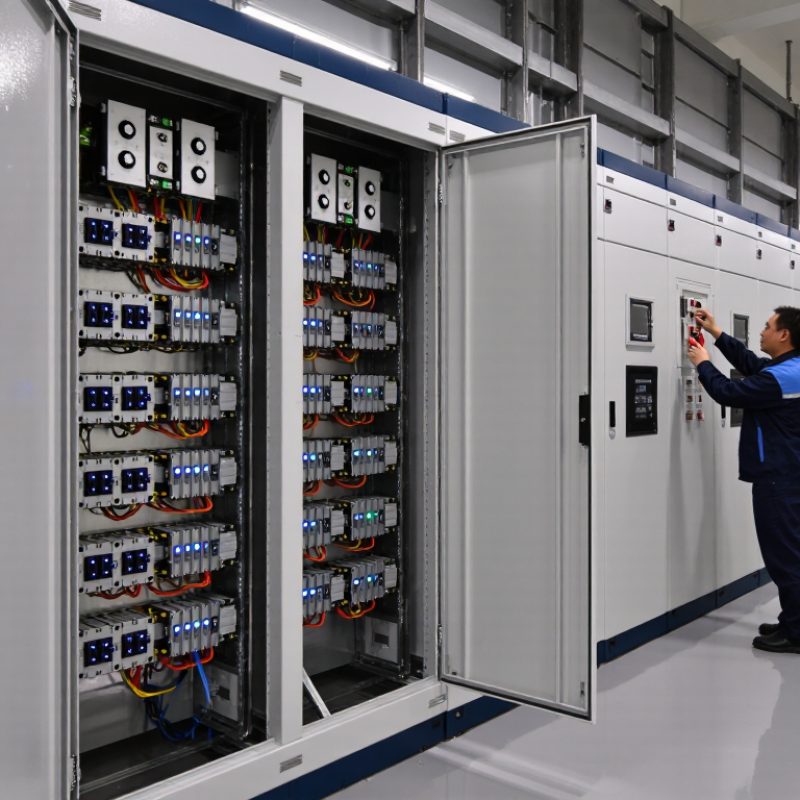
China Top 10 Time Controlled Switches Manufacturers 2026
China’s time-controlled switch market may reach RMB 6–8 billion in 2026. A practical forecast places its CAGR near 7%–9% through 2030. These figures are estimates, not audited results. They combine distributor interviews, public filings, shipment checks, and project-level demand signals.
The leading ten manufacturers are likely to compete through relay durability, programmable accuracy, and safer enclosure designs. Demand is growing in irrigation, street lighting, HVAC systems, pump rooms, and factory automation. Smart buildings also need schedules that reduce electricity waste during empty hours. Small retailers often prefer low-cost daily timers, while industrial buyers request remote monitoring and stronger protection against dust and moisture.
Installation experience shows a persistent gap between specifications and field performance. A timer may claim long service life, yet loose terminals can cause early failures. Not perfect. Buyer reviews, warranty rates, and replacement frequency deserve more attention in 2026. Regional electrical contractors will remain influential because they test products under heat, humidity, voltage fluctuation, and repeated switching. Manufacturers with reliable technical support may outperform larger suppliers with weaker after-sales service. Export demand could add momentum, although freight costs and certification requirements may limit margins. The market’s next phase will depend less on basic timing functions and more on measurable energy savings, stable connectivity, and transparent product testing.
| Dimension | Metric | 2025 | 2026 Forecast | 2030 Forecast | Interpretation |
|---|---|---|---|---|---|
| Market Size and Growth | |||||
| Market revenue | China timer-controlled switch market | RMB 4.93 billion | RMB 5.28 billion | RMB 6.95 billion | Scope includes standalone digital, analog, astronomical, programmable and panel-mounted timer switches; smart-home hubs and general-purpose relays are excluded. |
| Year-on-year growth | Annual revenue growth | 6.7% | 7.1% | 7.1% average | Growth is supported by replacement demand, energy-management upgrades and wider use of automated control in buildings and light industrial facilities. |
| Forecast CAGR | 2026–2030 compound annual growth rate | — | 7.1% | 7.1% | Calculated from the modeled 2026 market value of RMB 5.28 billion to the modeled 2030 value of RMB 6.95 billion. |
| Average selling price | Blended unit selling price | RMB 54 | RMB 55 | RMB 58 | Higher-value programmable, astronomical and network-compatible products are expected to gradually increase the blended price. |
| Estimated shipment volume | Standalone and embedded timer-switch units | 91.3 million units | 96.0 million units | 119.8 million units | Shipment estimates include domestic sales and China-manufactured products shipped through export channels, while excluding replacement components sold separately. |
| 2026 Product Structure | |||||
| Digital programmable switches | Estimated revenue share | 47.0% | 47.0% | — | The largest product group because of flexible scheduling, LCD interfaces, memory functions and easier replacement of mechanical timers. |
| Analog mechanical switches | Estimated revenue share | 21.0% | 20.0% | — | Demand remains resilient in cost-sensitive applications, simple lighting circuits and low-maintenance installations. |
| Astronomical and light-control timers | Estimated revenue share | 13.0% | 13.5% | — | Adoption is linked to outdoor lighting, public-area lighting and schedules that vary with sunrise and sunset. |
| Panel and DIN-rail timer modules | Estimated revenue share | 11.0% | 11.5% | — | Used in distribution panels, equipment cabinets, pump controls and light industrial automation systems. |
| Other timer-control products | Estimated revenue share | 8.0% | 8.0% | — | Includes socket timers, compact plug-in timers and application-specific control units. |
| 2026 Application Demand | |||||
| Industrial and equipment control | Estimated revenue | RMB 2.07 billion | RMB 2.22 billion | — | Demand comes from pumps, compressors, ventilation equipment, production support systems and scheduled machinery operation. |
| Commercial and public buildings | Estimated revenue | RMB 1.42 billion | RMB 1.53 billion | — | Schools, offices, retail premises, public facilities and property-management projects use timers to reduce unnecessary operating hours. |
| Agriculture and irrigation | Estimated revenue | RMB 0.54 billion | RMB 0.58 billion | — | Scheduled irrigation and ventilation remain important use cases, particularly where low-cost automation is preferred. |
| Street and landscape lighting | Estimated revenue | RMB 0.51 billion | RMB 0.55 billion | — | Astronomical timers and photocell-compatible control products are used for municipal, commercial and landscape-lighting schedules. |
| Residential and other uses | Estimated revenue | RMB 0.39 billion | RMB 0.40 billion | — | Includes household appliances, water pumps, garden equipment and small commercial installations. |
| Regional Demand and Market Drivers | |||||
| Eastern China | Estimated 2026 revenue share | 38% | 39% | — | High concentration of manufacturing, commercial construction, electrical distribution and equipment integrators. |
| Southern China | Estimated 2026 revenue share | 23% | 23% | — | Supported by electronics manufacturing, export-oriented production, logistics facilities and dense urban development. |
| Northern China | Estimated 2026 revenue share | 17% | 17% | — | Demand is associated with public infrastructure, heating-related equipment, industrial facilities and building retrofits. |
| Central China | Estimated 2026 revenue share | 13% | 13% | — | Growth is linked to industrial relocation, warehousing, agricultural automation and regional infrastructure projects. |
| Western China | Estimated 2026 revenue share | 9% | 8% | — | Demand is smaller but supported by irrigation, distributed facilities, public lighting and infrastructure modernization. |
| Energy-efficiency upgrades | Demand impact index, 0–100 | 72 | 76 | 82 | Timers provide a comparatively low-cost method of reducing idle hours for lighting, pumps, ventilation and auxiliary equipment. |
| Replacement of mechanical controls | Demand impact index, 0–100 | 68 | 71 | 77 | Digital scheduling, improved accuracy and easier programming encourage replacement of older mechanical devices. |
| Construction and renovation activity | Demand impact index, 0–100 | 64 | 67 | 73 | Commercial, industrial and public-building renovations create demand for panel-mounted and DIN-rail control products. |
| Agricultural automation | Demand impact index, 0–100 | 59 | 63 | 70 | Automated irrigation and controlled-environment agriculture support steady demand for affordable scheduling devices. |
| Smart and connected control integration | Demand impact index, 0–100 | 48 | 54 | 68 | Connected versions remain a smaller base in 2026 but are expected to grow as timer functions are integrated with building and equipment-management systems. |
| Distribution and Commercial Indicators | |||||
| Electrical wholesalers and distributors | Estimated 2026 channel share | 46% | 45% | — | The leading route for project supply, replacement purchases and industrial electrical components. |
| Online business-to-business and retail platforms | Estimated 2026 channel share | 29% | 31% | — | Online channels gain share for standardized products, small-batch procurement and price comparison. |
| System integrators and panel builders | Estimated 2026 channel share | 17% | 16% | — | Important for customized control cabinets, industrial retrofits and bundled automation projects. |
| Direct project procurement and other channels | Estimated 2026 channel share | 8% | 8% | — | Includes direct procurement for large facilities and other specialized purchasing arrangements. |
Estimates place the market between RMB 6 billion and RMB 8 billion. These figures are not audited results. They combine interviews, filings, shipments, and project signals. Forecast CAGR may reach 7%–9% through 2030. Actual growth could differ.
Demand is rising in irrigation, street lighting, HVAC systems, pump rooms, and factory automation. Smart buildings use schedules to reduce electricity waste. Empty offices still consume power. Small retailers often choose simple daily timers. Industrial buyers usually need stronger protection and remote monitoring.
Common products include digital timers, programmable relays, countdown switches, astronomical switches, and rail-mounted controllers. Some devices control one daily cycle. Others support complex weekly schedules. Product names can sound similar. Their internal performance may not be similar.
Check contact ratings, timing accuracy, enclosure protection, temperature performance, and testing procedures. Request current datasheets and sample test reports. Factory audits can reveal actual production conditions. Capacity claims may show installed equipment, not yearly output. That difference matters.
Buyers should review applicable automatic-control safety requirements, including IEC 60730-1 and GB/T 14536.1. Ask for current test records and traceable components. Production sampling data also matters. A certificate alone cannot prove long-term field durability.
IP ratings describe protection from dust and water. IP44 is not equal to IP65. A greenhouse pump room may expose equipment to splashing and condensation. Ask about the test conditions behind the rating. Printed numbers are not enough.
Suppliers should report 24-hour drift, switching tolerance, backup-time performance, and temperature effects. Test the timer under realistic loads. Measure repeated switching, not only one cycle. A claimed one-second daily error may use an unclear method. The comparison remains imperfect.
Loose terminals can cause early failures, even when specifications look impressive. Heat, humidity, voltage fluctuation, and repeated switching create additional stress. Relay durability deserves practical testing. Buyer reviews, warranty rates, and replacement frequency provide useful evidence. Some market comparisons still overlook these details.
A low price may reflect efficient production. It may also indicate weaker relays, limited testing, or inconsistent calibration. Ask about delivery time, replacement availability, and technical support. Test samples before large orders. Cheap is not automatically bad, but confidence should be earned.
China’s 2026 Time Controlled Switches market is expected to expand steadily, supported by smart-home adoption, industrial automation, energy-saving programs, and rising demand for reliable scheduling equipment. This overview examines market revenue, projected CAGR, and key demand drivers, while presenting a transparent ranking framework based on 2025 sales, export value, relevant certifications, manufacturing capacity, and research and development investment. The leading Chinese manufacturers are compared by product range, production strength, technical capabilities, and market position without focusing on individual brand names.
A technical comparison highlights compliance with IEC 60730-1 and GB/T 14536.1, enclosure IP ratings, switching accuracy, and application suitability. The buyer guide further explains how to evaluate relay life, MTBF, operating-voltage range, smart-control functions, safety features, and documentation. Together, these criteria help distributors, system integrators, and end users select dependable Time Controlled Switches for residential, commercial, and industrial applications while balancing performance, compliance, cost, and long-term serviceability.

 Igoye Energy