How to Choose Vacuum Contactors for Global Sourcing?

Time:2026-10-21 Author:Amelia
0%

Choosing Vacuum Contactors for global sourcing is not simply a price comparison. It is a technical risk decision. A contactor may look identical in two catalogues, yet behave differently after repeated motor starts, capacitor switching, or high-altitude installation.

Paul G. Slade, a recognized specialist in vacuum interrupter technology, offers a useful principle: “The interrupter must be matched to the switching duty, not selected by voltage rating alone.” This idea should guide every supplier review. Buyers should examine rated voltage, continuous current, utilization category, electrical endurance, mechanical endurance, coil voltage, and short-circuit coordination. IEC 60470 documentation can provide an important reference point. However, a certificate alone does not prove consistent production quality.

Details matter. Ask for routine test records, contact-material information, vacuum integrity data, and clear product traceability. Request samples from the same production line. Test them with the intended motor, transformer, or capacitor bank. A supplier audit should examine crimping, coil assembly, contact alignment, packaging, and final inspection. Small inconsistencies can become costly downtime.

Global sourcing adds another layer. Confirm technical support across time zones, spare-part availability, lead times, export documents, and change-notification procedures. Do not assume the lowest quotation represents the lowest total cost. It may exclude testing, engineering changes, or emergency inventory.

My own caution is simple: specifications can create false confidence. I might focus too heavily on electrical ratings and overlook installation conditions. Humidity, vibration, switching frequency, and maintenance skills also influence service life. Reliable sourcing requires evidence, comparison, and a willingness to question attractive assumptions.
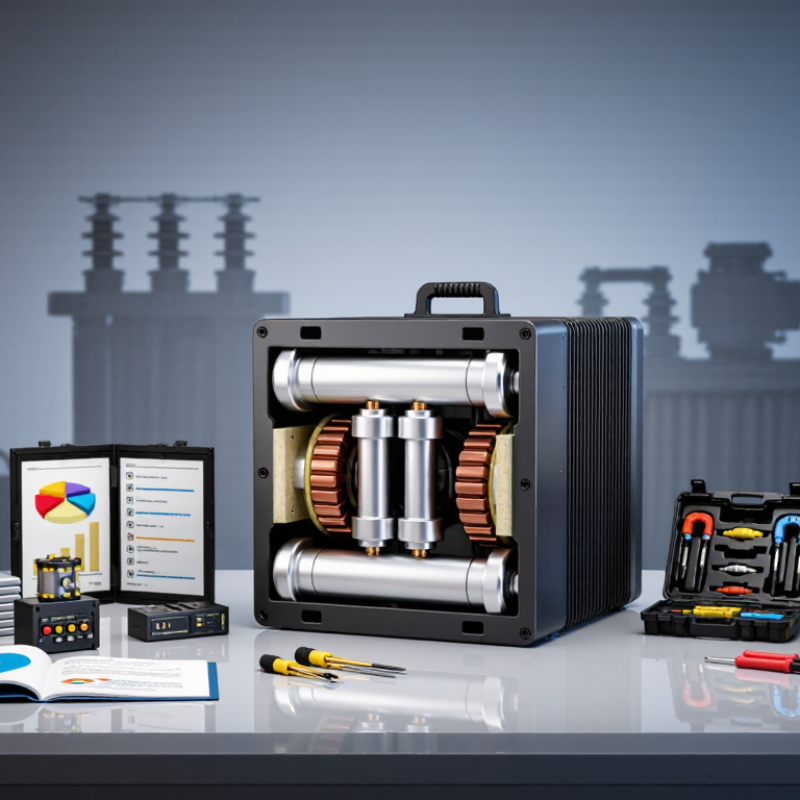
How to Choose Vacuum Contactors for Global Sourcing?

Define Load Duty: IEC 62271-106 Covers AC Contactors up to 12 kV

How to Choose Vacuum Contactors for Global Sourcing?

Define Load Duty: IEC 62271-106 Covers AC Contactors up to 12 kV

Choosing a vacuum contactor starts with the load, not the catalogue voltage. IEC 62271-106 applies to AC contactors and contactor-based motor-starters above 1 kV and up to 12 kV. It addresses ratings, service conditions, performance, and verification tests. A 6 kV motor may still require different contactor duty from a 6 kV transformer feeder.

Record the motor’s rated current, starting current, starting frequency, and expected operating cycles. Note whether the contactor switches a motor, transformer, capacitor bank, or mixed load. Vacuum interruption supports frequent operation, but the switching application controls contact wear and transient stress. Check rated making and breaking capacity, short-circuit coordination, electrical endurance, and mechanical endurance. Fuse coordination matters.

Do not rely on voltage alone.

It is a common sourcing mistake. I have seen specifications that listed “12 kV vacuum contactor” without stating starts per hour or load category. That gap can produce an apparently correct quotation and a poor field result. Request type-test evidence, routine-test records, wiring diagrams, control-voltage tolerances, and installation limits for altitude and temperature. Compare those documents against the actual site conditions. A factory test report is useful, but it cannot replace a clear duty definition. Recheck the assumptions. Small omissions become expensive.

Match Voltage and Current: Common Ratings Reach 12 kV and 800 A

Selecting a vacuum contactor for global sourcing starts with two numbers: voltage and current. A catalog may show ratings up to 12 kV and 800 A, but those figures need context. Verify the system’s maximum line voltage, operating current, frequency, and insulation level. Do not size voltage from the normal reading alone. Temporary overvoltage and altitude can reduce practical clearance margins. For an 11 kV network, a 12 kV rating may be too close if site conditions are severe.

Current selection requires more than reading the motor nameplate. Check continuous load, starting current, switching frequency, and the contactor’s utilization category. An 800 A device may handle steady current, yet repeated starts can increase heating and shorten contact life. Measure the enclosure temperature. Then review derating tables. For capacitor banks, transformers, and motors, inrush behavior differs sharply. Ask for tested data, not optimistic estimates.

In procurement work, I compare the datasheet with the one-line diagram and installation drawings. I also confirm terminal arrangement, control voltage, mechanical endurance, vacuum integrity checks, and replacement access. Standards documentation matters. Request routine-test records, type-test references, and clear tolerances from the supplier. I once accepted a technically correct rating that failed the cabinet layout review; the mistake was mine. A staged review prevents that. Leave room for uncertainty.

Verify Switching Class: Compare AC-3 Motor Duty and Capacitor Applications

When sourcing vacuum contactors globally, do not select by voltage and continuous current alone. Verify switching class first. AC-3 identifies motor duty for starting squirrel-cage motors and switching them off during normal operation. It does not automatically qualify a device for capacitor banks. Motor circuits create one type of electrical stress. Capacitor circuits can create sharp inrush currents, especially during back-to-back energization. The label is not enough. Ask for the applicable utilization category, tested current, operating frequency, and permitted switching frequency. A credible datasheet should state these limits clearly, not hide them in a sales table.

For capacitor applications, check whether the contactor is rated for the required capacitor-switching duty, often identified under AC-6b in IEC-based documentation. Confirm peak inrush, capacitance range, discharge conditions, and any required series reactors or damping components. Also review making capacity, electrical endurance, short-circuit coordination, and recovery voltage. Small detail, large consequence. A contactor may pass a motor test yet weld or suffer accelerated wear in a capacitor circuit. Request type-test reports or application test data, then compare the test setup with your panel. Do not treat a laboratory rating as universal approval.

Global sourcing adds practical checks. Confirm terminal geometry, control-coil tolerance, altitude limits, ambient temperature, insulation coordination, and certificates accepted in the target market. Ask how switching performance changes after repeated operations. Field reviews often expose mismatched assumptions between the supplier’s test bench and the installed cabinet. I have learned that a neat specification can still be incomplete. Check the waveform. If the supplier cannot explain the current peak and recovery behavior, pause the purchase and request better evidence.

Assess Endurance: Check Mechanical Life Above 100,000 Operating Cycles

How to Choose Vacuum Contactors for Global Sourcing?

When comparing vacuum contactors, mechanical endurance deserves more than a catalog number. Look for a rated mechanical life above 100,000 operating cycles. This figure describes repeated open-close movement, not only electrical switching under load. Ask how the supplier measured it. A credible report should identify test speed, ambient temperature, stroke limits, and inspection intervals.

In factory evaluations, I prefer a cycle counter connected to the operating mechanism. Run samples through repeated operations, then inspect spring tension, linkage play, auxiliary contacts, and terminal heating. A contactor may still move after 100,000 cycles, yet show slow closing or inconsistent contact pressure. That small delay can affect motor starting and control coordination.

Check the vacuum interrupter too, especially after vibration and thermal cycling.

The test is not glamorous.

Global sourcing adds practical risks.

Request endurance data from production units, not only laboratory prototypes. Compare sample results, serial traceability, and replacement-part availability. Confirm whether the stated life includes manual operations, remote commands, or both. A useful acceptance plan can test three units from different batches. Record coil current, operating time, and sound at fixed cycle points. Leave room for doubt. Results vary with alignment, voltage stability, and operator setup. A 100,000-cycle claim should be a starting threshold, not a promise of identical field performance. Accelerated testing may not reproduce years of dust, humidity, and cabinet vibration.

Qualify Global Suppliers: Confirm IEC Tests, Certifications, and Local Support

Global sourcing of vacuum contactors should begin with evidence, not catalogue promises. Ask each supplier for the applicable IEC standard and complete type-test documentation. For many high-voltage applications, IEC 62271-106 may apply. Check the exact product rating and application before accepting any claim. Review dielectric tests, temperature-rise results, mechanical endurance, electrical endurance, and short-circuit performance. Request laboratory names, report numbers, test dates, and tested model references. A certificate alone is not enough.

Verify whether certifications cover the delivered configuration, not only a similar series. Compare rated voltage, current, frequency, coil voltage, auxiliary contacts, and installation conditions. ISO 9001 can support process control, but it does not prove product compliance. Factory audits should examine incoming inspection, vacuum interrupter traceability, contact wear records, and final testing. Ask for sample test data. Small inconsistencies matter.

Local support often determines real project reliability. Confirm response times, spare-part availability, commissioning assistance, and warranty procedures in the destination market. A capable supplier should explain failure analysis without avoiding difficult questions. Trial units can reveal packaging weaknesses, coil heating, or mounting problems before volume shipment. I have seen apparently complete files omit the actual test configuration. That gap may be innocent, but it deserves written clarification. Do not rely on polished documents alone. Supplier qualification is never perfectly clean; records change, and assumptions need periodic review.

How to Choose Vacuum Contactors for Global Sourcing? - Qualify Global Suppliers: Confirm IEC Tests, Certifications, and Local Support

Supplier qualification and technical comparison matrix for medium-voltage vacuum contactors

Qualification Dimension Recommended Procurement Target Evidence to Request Global Sourcing Checkpoint Priority
Applicable product standard Use IEC 62271-106 for AC contactors, contactor-based controllers, and motor-starters rated above 1 kV and up to the applicable voltage range. Edition-controlled type-test report, product standard declaration, and clause-by-clause compliance matrix. Confirm that the tested construction, rated voltage, current, control voltage, and accessories match the offered configuration. Critical
Rated voltage and insulation level Typical project classes include 3.6 kV, 7.2 kV, and 12 kV; select rated short-duration power-frequency withstand voltage and lightning impulse withstand voltage according to the system insulation level. Rating plate, technical datasheet, insulation-coordination schedule, and dielectric test results. Do not compare only nominal voltage. Verify the complete insulation level and altitude correction requirements. Critical
Rated operational current Common medium-voltage motor and capacitor-switching applications use approximately 200–800 A, but the selected value must be based on the load duty and enclosure thermal design. Continuous-current rating, temperature-rise test report, derating curves, and terminal connection limits. Check current at the actual ambient temperature, enclosure arrangement, duty cycle, and ventilation conditions. High
Making and breaking capability Require ratings suitable for the intended motor, transformer, or capacitor duty; do not use a general-purpose rating without confirming the specific utilization category. Type-test report covering making current, breaking current, utilization duty, and switching sequence. Match the test duty to the load. Motor starting, transformer energization, and capacitor switching impose different electrical stresses. Critical
Short-circuit withstand and coordination The contactor assembly must be coordinated with the upstream fuse or circuit-breaker. Short-circuit values must be stated for the complete approved combination, not for the contactor alone. Short-circuit test report, coordination table, fuse or breaker recommendations, and protection settings. Verify prospective fault current, peak current, fault duration, and the exact protective device used during testing. Critical
Endurance and vacuum interrupter life Require separate mechanical and electrical endurance ratings. The required operating-cycle count depends on switching frequency and load type. Endurance test report, vacuum-bottle inspection method, contact-wear limit, and recommended replacement interval. Ask whether the endurance rating applies to the complete contactor or only to the vacuum interrupter under reduced test conditions. High
Dielectric and partial-discharge verification Require power-frequency withstand testing and, where specified by the project, partial-discharge measurement for the complete assembly and insulation system. Routine-test records for each unit, type-test results, test voltage, test duration, and partial-discharge acceptance criteria where applicable. Confirm test conditions, measurement location, environmental background level, and traceability to the delivered serial number. Critical
Control circuit and coil compatibility Specify control voltage, frequency, permissible tolerance, inrush current, holding power, closing time, opening time, and undervoltage behavior. Control-circuit schematic, coil data, timing test results, wiring diagram, and interface requirements. Confirm compatibility with the local control power system, PLC output, interlocking circuit, and protection relay. High
Environmental and installation conditions Declare ambient temperature, humidity, altitude, pollution level, vibration, shock, indoor or outdoor installation, and enclosure protection. Environmental specification, altitude derating curve, vibration test evidence, and IP code test report under IEC 60529 when applicable. For altitudes above 1,000 m, request insulation and thermal derating calculations rather than assuming standard ratings remain unchanged. High
Factory routine testing Every delivered unit should undergo documented routine checks before shipment, including wiring, dielectric integrity, operation, and mechanical interlock verification. Signed routine-test certificate linked to the unit serial number, inspection checklist, and nonconformity disposition records. Make routine-test documentation a shipping-release requirement and reserve the right to witness testing remotely or on site. Critical
Certification and market access Obtain the conformity documents required in the destination market. CE or UKCA may apply to the relevant product scope; North American projects may require certification accepted by the authority having jurisdiction. Declaration of conformity, certificate scope, certification schedule, applicable technical file references, and marking artwork. Check that certificates cover the exact voltage class, enclosure, control system, and manufacturing site—not merely a similar product family. Critical
Quality-management system Prefer an independently certified quality-management system aligned with ISO 9001 and supported by documented design-change and corrective-action processes. Valid certificate, scope of certification, audit status, process flow, incoming inspection plan, and corrective-action records. Confirm the certificate covers the actual production location and the manufacture of medium-voltage switching equipment. High
Traceability and change control Maintain traceability for vacuum interrupters, coils, insulating parts, major contact materials, test results, and approved drawings. Bill of materials, serial-number system, revision history, approved-vendor list, and formal product-change notification procedure. Require advance approval for changes affecting dimensions, materials, insulation, performance, firmware, or critical suppliers. High
Local technical support Require a named regional contact, commissioning procedure, troubleshooting support, spare-parts channel, and response-time commitment. Support organization chart, service coverage map, escalation process, training records, and sample service-level agreement. Assess language coverage, time-zone response, field-service availability, and the ability to support installation and commissioning locally. High
Spare parts and maintainability Define availability for coils, auxiliary contacts, control modules, fuses, mechanical components, and approved vacuum interrupter assemblies for the expected service life. Spare-parts list, recommended stock levels, lead times, maintenance instructions, and end-of-life notification policy. Evaluate total lifecycle cost, not only purchase price; identify parts with long lead times or special tooling requirements. High
Packaging and international logistics Use shock-resistant, moisture-controlled packaging with clear lifting points, orientation marks, and protection for ceramic or molded insulation components. Packaging specification, drop or vibration qualification where applicable, export documents, packing list, and inspection photographs. Define Incoterms, insurance responsibility, customs classification, preservation period, and incoming inspection requirements before purchase. Medium
Pre-shipment qualification gate Approve the supplier only after technical-document review, sample or first-article inspection, certificate verification, routine-test acceptance, and confirmation of local support. Signed qualification checklist, approved drawings, inspection and test plan, deviation log, and final supplier scorecard. Use a documented pass/fail process; unresolved deviations should require written engineering approval before production release. Critical
Procurement note: Ratings and test requirements must be finalized against the project voltage system, load duty, fault level, installation environment, destination-market regulations, and the latest applicable edition of the referenced standards.

FAQS

What voltage rating should I choose for an 11 kV system?

A 12 kV rating may be too close under severe conditions. Check overvoltage, altitude, insulation level, and required clearance.

Is the highest current rating always the safest choice?

No. Confirm continuous load, starting current, switching frequency, and utilization category. An 800 A unit may overheat during repeated starts.

Why should enclosure temperature be measured?

Heat affects contact life and continuous current capacity. Measure temperature inside the cabinet, then apply the supplier’s derating table.

Do motors, transformers, and capacitor banks need different checks?

Yes. Their inrush behavior differs sharply. Request tested switching data for the specific load type.

What mechanical endurance figure should procurement teams seek?

Look for more than 100,000 operating cycles. Treat this as a threshold, not a guaranteed field result.

How can mechanical endurance claims be verified?

Ask for test speed, ambient temperature, stroke limits, and inspection intervals. A cycle counter gives useful evidence. Still, evidence can be incomplete.

What parts should be inspected after repeated operations?

Check spring tension, linkage play, auxiliary contacts, terminal heating, and closing consistency. Inspect the vacuum interrupter after vibration and thermal cycling.

Should laboratory endurance data be accepted without questions?

No. Request results from production units and different batches. Dust, humidity, vibration, and voltage variation may change performance.

What documents should be requested before purchase?

Request routine-test records, type-test references, tolerances, endurance data, and serial traceability. Compare them with drawings and the one-line diagram.

What practical mistake can happen during selection?

A technically correct rating may fail the cabinet layout review. Check terminals, control voltage, access space, and replacement routes. Leave room for doubt.

Conclusion

Choosing Vacuum Contactors for global sourcing requires a structured evaluation of technical performance, application suitability, and supplier reliability. Start by defining the load duty and confirming that the selected equipment aligns with IEC 62271-106 requirements for AC contactors up to 12 kV. Next, match the rated voltage and current to the system, noting that common configurations may reach 12 kV and 800 A. The switching class should also be verified, especially when comparing AC-3 motor-duty applications with capacitor-switching requirements.

Endurance is another important consideration. Buyers should review both mechanical and electrical service life, with mechanical endurance above 100,000 operating cycles often supporting demanding applications. For global sourcing, qualify suppliers by checking documented IEC test results, relevant certifications, production consistency, and the availability of responsive local technical support. A balanced review of these factors helps ensure safe integration, dependable operation, and long-term value across international projects.


Amelia

Amelia

Amelia is a seasoned marketing professional with a wealth of expertise in our company’s core offerings. With an unwavering passion for driving growth and innovation, she plays a pivotal role in shaping our marketing strategies and enhancing brand visibility. A key aspect of her responsibilities......