Top Cable Branch Box Manufacturers and Suppliers

Time:2026-10-27 Author:Oliver
0%

Choosing reliable Cable Branch Box manufacturers and suppliers requires more than comparing catalog prices. These components protect electrical connections, organize branch circuits, and support safer installation in demanding environments. A dependable supplier should demonstrate practical manufacturing experience, documented quality controls, and clear technical communication.

Look for enclosures with suitable insulation, durable terminals, secure covers, and effective protection against dust or moisture. Material selection matters. Flame-retardant engineering plastics can reduce weight, while metal housings may provide stronger mechanical protection. Ask about temperature ratings, cable compatibility, terminal capacity, ingress protection testing, and production consistency.

Details matter.

Experienced manufacturers usually provide drawings, installation guidance, sample testing, and traceable inspection records. They should explain whether products suit industrial machinery, renewable energy systems, construction projects, or outdoor distribution points. Certifications can support credibility, but certificates alone cannot replace careful product evaluation. A sample may reveal loose screws, uneven molding, or cramped wiring space before a large order exposes the problem.

The leading Cable Branch Box suppliers often combine flexible customization with stable supply capability. They may adjust cable entries, terminal layouts, labels, colors, or mounting methods for specific projects. Still, no supplier is perfect. Delivery delays, unclear revisions, and inconsistent packaging can create avoidable installation risks. Buyers should review communication quality, warranty terms, replacement procedures, and after-sales support alongside technical specifications.

This guide examines reputable Cable Branch Box manufacturers and suppliers through product quality, engineering capability, factory experience, responsiveness, and long-term reliability. The goal is practical comparison, not exaggerated praise. A strong choice should perform consistently after installation, not merely look convincing on a product page.
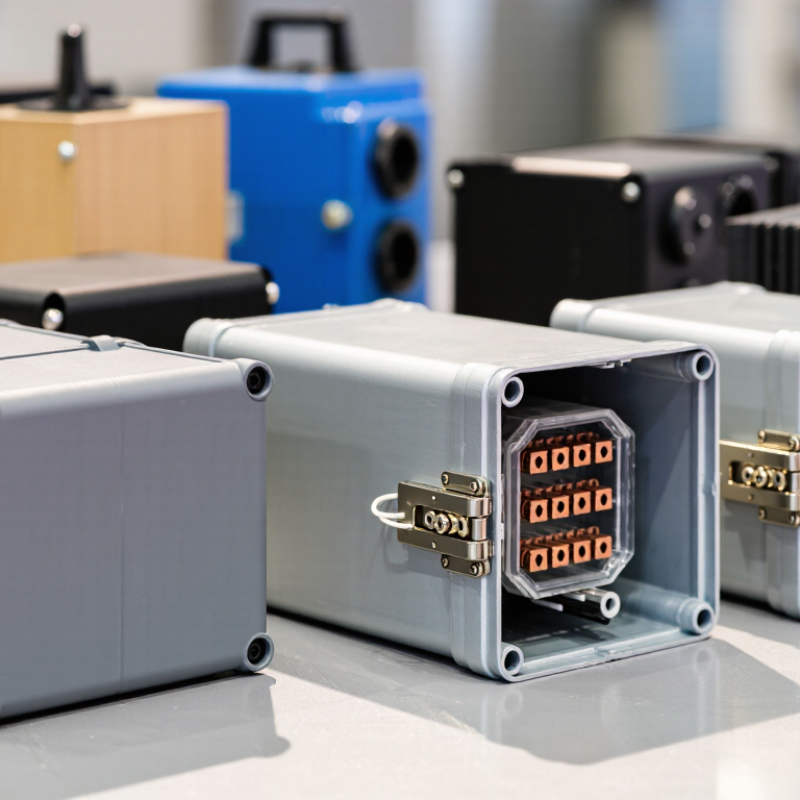
Top Cable Branch Box Manufacturers and Suppliers

Cable Branch Boxes Explained: Designs, Functions, and 0.6/1 kV Applications

Cable branch boxes create secure connection points in low-voltage distribution systems. They divide one incoming cable into several outgoing circuits. Typical designs use molded polymer, stainless steel, or coated metal enclosures. The choice depends on location, impact risk, heat, and moisture exposure.

For 0.6/1 kV applications, insulation quality and terminal spacing require careful attention. A reliable box should provide stable contact pressure, clear cable identification, and effective strain relief. Sealed models commonly use gaskets and compression glands to limit dust and water entry. Indoor units may use simpler ventilation and enclosure designs. Outdoor units need stronger protection against ultraviolet exposure, condensation, and accidental impact. It is easy to overfocus on enclosure appearance. Internal clearances matter more.

From field installation experience, accessible terminals reduce maintenance time and connection errors. Conductive parts should resist corrosion, while the enclosure should tolerate expected temperature changes. Check the rated voltage, current capacity, short-circuit performance, ingress protection rating, and installation method. Supplier documentation should include drawings, material details, inspection records, and applicable test results. A manufacturer with traceable quality control offers better technical confidence. However, published data may not reflect every site condition. Cable diameter, bending space, and installation tools still require verification. A rushed selection can create heat at the branch point. Small details become serious later.

Core Selection Criteria: IEC 61439, IP54–IP68, and Short-Circuit Ratings

Selecting top cable branch box manufacturers and suppliers requires more than checking enclosure size or delivery time. The IEC Electricity 2024 report expects global electricity demand to grow by about 4% annually through 2026. More distribution equipment will operate in crowded, hotter, and less forgiving environments. Buyers should request evidence of IEC 61439 design verification, not general claims of compliance. The standard addresses temperature rise, dielectric properties, construction, and short-circuit withstand performance.

IP ratings require equal attention. Under IEC 60529, IP54 protects against limited dust ingress and water splashes. IP65 adds dust-tight construction and water jets. IP66 handles powerful water jets, while IP67 and IP68 address temporary or continuous immersion under stated conditions. IP68 is not a universal waterproof promise. Installation depth and test duration still matter. Check door seals, cable glands, drain arrangements, and enclosure materials. A wet site exposes weak details quickly.

Short-circuit ratings should match the available fault current at the installation point. Ask for rated short-time withstand current, Icw, peak withstand current, Ipk, and the declared test duration. A high headline value can mislead when upstream protection differs. IEC 61439 verification records should identify the tested configuration, conductor arrangement, and protective-device conditions. Field experience suggests checking terminal torque and cable bending space during inspection, not only during purchasing. This step is often missed. Supplier documents may look complete, yet coordination data can remain vague. That deserves careful questioning.

Comparing Manufacturers: Enclosures, Busbars, Materials, and Up to 630 A

Top Cable Branch Box Manufacturers and Suppliers

Rising electricity demand makes dependable branch boxes more important. The IEA Electricity 2024 report projects global electricity demand to grow by about 3.2% annually through 2026. This pressure reaches factories, data centers, and infrastructure projects. Buyers should compare more than price. Enclosure strength, busbar design, materials, and verified current performance matter.

For outdoor installations, stainless steel or UV-stabilized polycarbonate can resist corrosion and sunlight. Powder-coated steel often suits indoor industrial rooms, but coating quality deserves inspection. Busbars should provide stable contact pressure, clear phase spacing, and low temperature rise.

A 630 A rating is not universal. Ambient temperature, cable size, ventilation, and installation position can reduce usable capacity. IEC 61439-1 and IEC 61439-2 require design verification, while IEC 60529 helps confirm the enclosure’s IP protection.

Ask suppliers for test records, short-circuit withstand data, torque values, and thermal-rise results. A neat datasheet can still hide weak details.

Tips: Check the complete assembly, not only the box. Confirm copper or aluminium busbar grade, plating, insulation, gland layout, and maintenance access. Request performance data at the actual ambient temperature. Small omissions become expensive later. Comparing three suppliers with the same technical schedule exposes vague claims quickly. One practical concern remains: some projects specify 630 A before checking cable derating, which can make the selection optimistic rather than reliable.

Supplier Due Diligence: Type Tests, Certifications, Warranty, and Lead Times

Top Cable Branch Box Manufacturers and Suppliers

Supplier due diligence should begin with test evidence, not polished brochures. Request type-test reports covering temperature rise, dielectric strength, short-circuit withstand, enclosure protection, and mechanical durability. For assemblies governed by IEC 61439, verify the report matches the proposed design, rated current, materials, and installation method. A certificate for another product is not enough. Ask for serialised routine-test records and photographs of the actual production line. Small details matter, such as torque markings on terminals and sealed cable entries.

Certification also needs careful reading. ISO’s 2023 Survey recorded more than 1.2 million ISO 9001 certificates worldwide, but certification alone does not prove consistent branch-box performance. Check the certificate scope, issuing body, expiry date, and covered factory. Request references for similar voltage, cable size, and outdoor exposure. Warranty terms should state response times, exclusions, replacement procedures, and whether labour is included. Vague wording creates expensive arguments later.

Lead time deserves evidence. UNCTAD’s Review of Maritime Transport 2024 reported seaborne trade growth of 2.4% in 2023 and forecast 2.1% growth for 2024, adding pressure to transport capacity. Ask suppliers to separate engineering, testing, production, and shipping time. Require a dated manufacturing schedule and written notice rules for delays. I would also verify two recent deliveries, not just one. That is less convenient. It is more reliable. Forecasts can still fail when a casting, gasket, or certified component is unavailable.

Top Cable Branch Box Manufacturers and Suppliers by Industry and Region

Top Cable Branch Box Manufacturers and Suppliers by Industry and Region

Cable branch box demand is rising with grid upgrades, renewable projects, and industrial electrification. The International Energy Agency’s Electricity 2024 report expects global electricity demand to grow by about 4% annually through 2026. That growth increases the need for reliable branching points in substations, factories, and commercial buildings.

Utility projects usually require medium-voltage branch boxes with sealed enclosures, tested insulation, and clear fault-access procedures. Renewable installations often need compact designs for solar combiner areas, battery sites, and wind substations. The IEA’s Renewables 2024 report forecasts more than 5,500 GW of new renewable capacity by 2030. Suppliers serving these projects should demonstrate thermal testing, ingress protection, and documented field experience. Small details matter, such as cable bending space and drain paths.

Regional priorities differ. European buyers often check IEC conformity and fire performance. North American projects commonly require certification aligned with local electrical codes. In Asia-Pacific, suppliers may need flexible production, rapid delivery, and climate-resistant materials for humid or coastal sites. Procurement teams should compare factory audits, test reports, warranty terms, and replacement support. Price alone is a weak filter.

There is no universal top supplier. A technically strong manufacturer may still struggle with local service or spare parts. Buyer feedback can also be incomplete. That is worth questioning. The best shortlist combines verified testing, regional compliance, installation evidence, and transparent after-sales support.

Cable Branch Box Demand by Industry and Region

The chart presents a comparative 2024 demand index for cable branch box applications across major industries and global regions. The index uses 2023 demand as the baseline of 100 and reflects relative installation activity rather than company or brand sales.

Higher values indicate stronger relative demand driven by industrial expansion, infrastructure upgrades, renewable-energy projects, commercial construction, and data-center development.

FAQS

What is a cable branch box used for?

It divides one incoming cable into several outgoing circuits. This creates a protected connection point. It also simplifies distribution and maintenance.

Which enclosure materials are commonly used?

Common choices include molded polymer, stainless steel, and coated metal. Selection depends on heat, moisture, impact, and location. Appearance should not dominate the decision.

What matters most in a 0.6/1 kV branch box?

Check insulation quality, terminal spacing, contact pressure, and strain relief. Cable identification should remain clear after installation. Internal clearance matters greatly.

What protection level is suitable for outdoor installation?

Outdoor units usually need stronger protection against dust, water, ultraviolet exposure, and impact. IP65 resists dust and water jets. IP67 and IP68 involve immersion conditions. IP68 is not unlimited waterproof protection.

What should buyers check for short-circuit performance?

Match the box rating with the available fault current. Review Icw, Ipk, and the declared test duration. Also confirm the tested conductor arrangement and protective-device conditions. A large headline value can mislead.

Which supplier documents should be requested?

Request drawings, material details, inspection records, and applicable test results. Type-test reports should match the proposed design and rated current. Routine-test records should identify actual production units. Brochures are not enough.

How should certification and warranty terms be reviewed?

Check the certificate scope, issuing body, expiry date, and covered factory. Warranty terms should explain response times and replacement procedures. Confirm whether labor is included. Vague wording creates later disputes.

How can delivery reliability be assessed?

Ask suppliers to separate engineering, testing, production, and shipping time. Request a dated manufacturing schedule. Confirm written delay-notice procedures. I would verify two recent deliveries, not one. Forecasts can still fail.

Conclusion

This guide provides a practical overview of the Cable Branch Box, explaining its role in safely distributing power from a main cable to multiple outgoing circuits. It covers common designs, enclosure structures, busbar arrangements, and applications in 0.6/1 kV low-voltage systems. Readers will also learn how to evaluate essential specifications, including IEC 61439 compliance, IP54 to IP68 ingress protection, material selection, thermal performance, and short-circuit withstand ratings.

The article compares manufacturers and suppliers by examining enclosure quality, conductor capacity, customization options, and current ratings up to 630 A. It also presents a structured supplier due-diligence process, focusing on type-test documentation, certifications, warranty terms, production capability, delivery schedules, and after-sales support. Finally, it explains how selection priorities may vary across industrial, commercial, infrastructure, renewable-energy, and regional markets, helping buyers identify reliable solutions for safe, durable, and efficient cable distribution.

Oliver

Oliver

Oliver is a seasoned marketing professional with a wealth of expertise in driving brand awareness and engagement. With a deep understanding of our company's product offerings, he consistently delivers high-quality content that enriches our professional blog. His insights not only shed light on......