Choosing the China Top 10 DC Contactor Manufacturers requires more than counting factory size or export volume. DC Contactors operate inside demanding systems, including electric vehicles, battery storage cabinets, charging stations, forklifts, and solar inverters. A reliable manufacturer must control arc suppression, contact welding, insulation distance, coil power, and thermal performance.
John G. Kassakian, a respected power electronics expert, once defined the field this way: “Power electronics is the technology of controlling and converting electrical energy.” His observation explains why a DC contactor is not merely a switch. It is a safety component that must interrupt current without creating dangerous arcing or excessive heat.
This introduction examines ten leading Chinese manufacturers through practical criteria. These include rated voltage, continuous current, short-circuit capability, mechanical life, electrical life, sealing quality, response time, and production consistency. Certification support also matters. Customers may need CE, UL, IATF 16949, or other market-specific documentation.
The list is not absolute. That deserves honesty.
A supplier strong in 900-volt battery systems may not suit a compact 48-volt controller. Another company may offer excellent prototypes but weaker after-sales support. Factory audits, sample testing, and application reviews remain necessary before purchasing.
Real details matter. Does the contactor stay cool inside a sealed battery box? Does the auxiliary contact provide dependable feedback after thousands of cycles? Can the manufacturer explain failure data clearly?
The following comparison highlights China’s notable DC Contactor manufacturers, their product strengths, typical applications, and the purchasing risks buyers should consider. It aims to support informed decisions, not promote a single supplier without evidence.
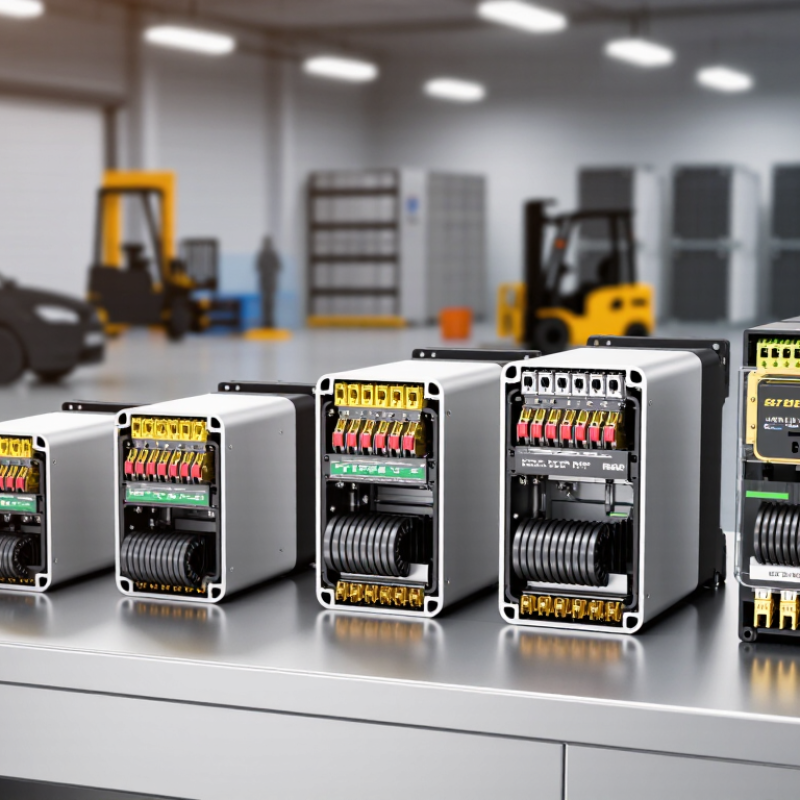
A DC contactor is an electrically controlled switch for high-current direct-current circuits. Unlike a small relay, it handles heavy loads safely and repeatedly. Its coil opens or closes the main contacts, while auxiliary contacts can report operating status to a controller.
DC contactors are used in electric vehicles, charging equipment, battery storage systems, solar inverters, forklifts, and industrial power supplies. In an electric vehicle, one contactor may connect the battery pack to the inverter. Another can isolate the circuit during maintenance or a detected fault. The International Energy Agency reported nearly 14 million electric cars sold worldwide in 2023, representing about 18% of new car sales. That growth increases demand for reliable high-voltage switching components.
Selection requires more than checking voltage and current. Engineers must examine continuous current, breaking capacity, coil power, insulation distance, contact resistance, and DC arc suppression. Pre-charge contactors also limit inrush current before the main connection closes. MarketsandMarkets identifies transportation and energy storage as major growth areas for the global contactor market. Still, published ratings can mislead when temperature, altitude, switching frequency, and cable length change. A perfect selection is rare. Field testing remains necessary, especially in compact battery cabinets where heat has limited escape paths. Industry checks should also follow applicable electrical standards, including IEC 60947-4-1 where relevant.
China’s DC contactor market is built around an expanding electrical mobility ecosystem. The China Association of Automobile Manufacturers reported 12.87 million new-energy vehicle sales in 2024, up 35.5% year on year. This volume supports demand for contactors in battery packs, charging equipment, power conversion systems, and energy storage cabinets.
The structure is layered. Large manufacturers usually control magnetic design, molding, assembly, testing, and export compliance. Smaller factories often specialize in silver-alloy contacts, ceramic chambers, coils, or customized housings. Industrial clusters near the Yangtze River Delta and Pearl River Delta improve access to metal suppliers, tooling companies, ports, and engineering labor. That proximity can shorten development cycles. It does not guarantee stable quality.
International demand is also changing the supplier landscape. The International Energy Agency’s Global EV Outlook 2025 reported more than 17 million electric cars sold worldwide in 2024. Buyers now examine contact endurance, insulation performance, gas sealing, response time, and thermal behavior, not only unit price. Many suppliers therefore maintain laboratories for life-cycle testing and follow relevant IEC requirements. Some factories still rely too heavily on final inspection. That is a weakness. Reliable production needs traceable materials, process controls, and test records from the first batch. Procurement teams should verify these details through samples, factory audits, and independent certification reports.
China Top 10 DC Contactor Manufacturers: Key Criteria for Ranking the Top 10 Manufacturers
Ranking DC contactor manufacturers requires more than comparing annual sales. The IEA reported nearly 14 million new electric car registrations worldwide in 2023. This growth increases demand for reliable switching components in battery systems, charging equipment, and energy storage.
A credible ranking should examine rated voltage, continuous current, breaking capacity, insulation performance, and electrical endurance. These details reveal whether a product survives real thermal and vibration stress.
Compliance is a practical filter. Products should demonstrate testing against IEC 60947-4-1 requirements, supported by traceable laboratory records.
For sealed contactors, engineers should inspect helium leak results, contact resistance, dielectric strength, and performance after temperature cycling.
MarketsandMarkets identified battery applications as a major driver of the global contactor market in its 2024 industry analysis.
However, market growth alone cannot prove manufacturing quality. It only shows opportunity.
Field experience also matters. Rankers should compare failure rates, warranty claims, delivery consistency, and technical response times over at least three years.
Factory audits should review incoming-material checks, automated welding, end-of-line testing, and lot traceability. This process is slower. It is also more honest.
Public data may be incomplete, and some suppliers report test results without independent verification.
A balanced score can assign 30% to safety and reliability, 25% to electrical performance, 20% to production capability, 15% to service quality, and 10% to cost. The weighting is imperfect and should be reviewed when application risks change.
China’s top 10 DC contactor manufacturers serve electric vehicles, charging stations, solar storage, and industrial control systems. Their factories often combine automated assembly, coil winding, sealing, and electrical testing. A dependable supplier should provide stable contact resistance, accurate coil voltage, and clear production records. These details matter when equipment operates inside a hot cabinet or beside a vibrating battery pack.
The strongest manufacturers usually demonstrate compliance with relevant international standards, including IEC requirements. They should also offer endurance data, temperature-rise reports, and sample testing before mass production. Engineers often compare switching capacity, insulation distance, response time, and mechanical life. Certification alone is not enough. A polished brochure may hide weak after-sales support or inconsistent batches. No supplier is perfect. Regular audits remain necessary, even after a successful first order.
Tips: Ask for test reports linked to specific models, not general factory documents. Confirm the rated voltage under real load conditions. Request samples from different production batches. Check whether the manufacturer can trace raw materials, test results, and final inspections. Small oversights can become expensive failures.
China Top 10 DC Contactor Manufacturers? How to Compare and Select the Right Supplier
China’s DC contactor market is expanding with electric mobility and energy storage. The IEA Global EV Outlook 2024 reported nearly 14 million electric car sales in 2023. That growth increases demand for reliable high-voltage switching components. However, supplier selection should not depend on ranking lists alone. Confirm the contactor’s continuous current, breaking capacity, coil voltage, insulation rating, and thermal performance. Ask for test records under real load conditions, not only laboratory photographs. Small details matter.
Check compliance with IEC 60947-4-1 and any required regional certification. Review the supplier’s quality system, traceability process, and failure-analysis method. A professional manufacturer should provide clear drawings, tolerance data, lifecycle results, and sample inspection reports. MarketsandMarkets has identified electrification and energy storage as major drivers for the global contactor market, but market forecasts cannot replace product validation. They are not guarantees.
Request samples from at least three suppliers. Compare contact resistance after repeated switching, acoustic noise, sealing quality, and delivery consistency. A low quotation may hide tooling, testing, or warranty costs. Keep this in mind. Factory audits are useful, yet one visit cannot prove long-term reliability. I would also review field-return data, although suppliers may share incomplete figures. That gap deserves careful questioning.
The chart presents a practical 100-point evaluation framework for comparing DC contactor suppliers. Product safety and reliability receive the highest weighting, followed by electrical performance, quality consistency, certification coverage, customization capability, delivery performance, and total cost. Buyers should adjust the weights according to voltage, current, switching frequency, environmental conditions, and required certifications.
Electric vehicles, charging equipment, power converters, and energy storage cabinets create strong demand. Battery systems need dependable high-voltage switching. Demand can change quickly.
Large manufacturers often manage magnetic design, molding, assembly, testing, and export documentation. Smaller factories may produce silver-alloy contacts, ceramic chambers, coils, or custom housings. This division improves specialization, but coordination can be uneven.
Industrial clusters near major river and coastal regions provide metal suppliers, tooling firms, ports, and engineering workers. Close suppliers can shorten development cycles. Quality is not guaranteed.
Compare continuous current, breaking capacity, coil voltage, insulation rating, response time, and thermal performance. Check contact endurance and gas-sealing quality. Price alone is misleading.
Request repeated-switching data, contact-resistance results, insulation tests, thermal reports, and lifecycle records. Testing should use realistic load conditions. Photos are not enough.
Review drawings, tolerance data, material traceability, sample inspection reports, and failure-analysis procedures. Ask how the factory controls every production batch. Final inspection alone is a weakness.
Request samples from at least three suppliers. Compare switching noise, sealing, contact resistance, and delivery consistency. Three samples help, but they cannot prove long-term reliability.
No. A factory visit shows current conditions, not years of field performance. Market forecasts indicate direction, not product quality. Review field-return data, even when suppliers provide incomplete figures. That gap matters.
This guide explains what Dc Contactors are, how they control and interrupt direct-current power, and where they are commonly used, including electric vehicles, charging systems, battery storage, solar installations, industrial equipment, and backup power systems. It also provides an overview of China’s DC contactor manufacturing market, highlighting the roles of specialized manufacturers, large electrical equipment producers, and component suppliers serving both domestic and international customers.
To identify the top 10 manufacturers, the article introduces practical evaluation criteria such as product reliability, current and voltage range, switching performance, safety certifications, testing capabilities, customization support, production capacity, delivery stability, technical service, and overall value. A concise comparison helps readers understand the strengths of different supplier types, while the final section offers a structured approach to selecting the right partner according to application requirements, operating conditions, quality expectations, budget, and long-term cooperation goals.

Igoye Energy