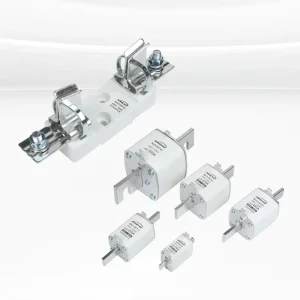
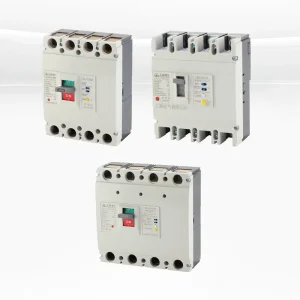
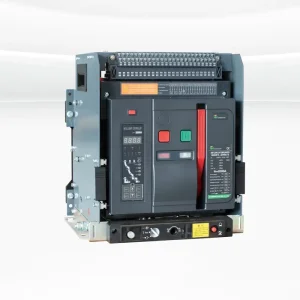
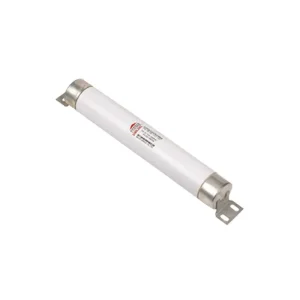
Explore our extensive range of high-performance components optimized for grid integration, power management, and reliable industrial distribution networks.
In the rapidly transitioning global energy landscape, power quality has moved from a standard maintenance item to a mission-critical operational concern. The massive deployment of non-linear loads, heavy electric machinery, and variable renewable energy sources (such as utility-scale wind and solar power) introduces extreme volatility into current waveforms. High rates of reactive power draw and harmonic pollution lead to catastrophic grid instability, excessive voltage drops, transformer overheating, and financial penalties from utility operators.
A Static Reactive Power Generator (SVG), also historically referred to as a Static Synchronous Compensator (STATCOM), stands as the most advanced solution to these power challenges. Unlike traditional capacitor banks that supply coarse, step-controlled reactive compensation, or Static Var Compensators (SVCs) that rely on thyristor-switched inductive/capacitive branches, an SVG utilizes self-commutated power semiconductor devices—specifically Insulated Gate Bipolar Transistors (IGBTs)—to supply dynamically managed reactive power.
By continuously monitoring the grid's phase angle and current waves via high-speed Digital Signal Processors (DSPs), the SVG acts as a controlled current source. It injects reactive currents that are exactly $90^\circ$ out of phase with the grid voltage, dynamically compensating for capacitive or inductive displacements. The system achieves a power factor of up to 0.99 under highly transient loading conditions, protecting upstream electrical systems and drastically reducing energy loss.
To understand the immense information gain and structural superiority of the active SVG approach, it is vital to contrast it with legacy technologies. Traditional setups rely on passive LC circuits, which are highly vulnerable to system resonance and decay quickly when system voltage drops. The table below outlines these major differences, showcasing why modern system designers choose SVG setups.
| Performance Characteristic | Static Var Generator (SVG / STATCOM) | Static Var Compensator (SVC) | Capacitor Banks (TSC / MSC) |
|---|---|---|---|
| Response Time | < 5 milliseconds (Ultra-fast dynamic tracking) | 20 - 40 milliseconds | Seconds to minutes (Delayed switching) |
| Compensation Vector | Stepless, continuous capacitive & inductive | Step-less but bulky reactive tuning | Discrete stepped stages |
| Low Voltage Performance | Maintains nominal rated current output | Output degrades quadratically ($Q \propto V^2$) | Output degrades quadratically ($Q \propto V^2$) |
| Resonance Hazard | Zero risk; actively isolates grid resonances | High potential for resonance with grid impedance | Extreme risk of harmonic resonance amplification |
| Harmonic Mitigation | Active filtering capability (up to 13th/25th order) | Produces internal harmonics (requires extra filters) | Exacerbates background grid harmonics |
| Footprint Requirements | Ultra-compact, modular stack-mounting | Large open switchyard footprints needed | Moderate to large capacitor racks |
The future engineering roadmap of the Static Reactive Power Generator lies in the transition to Silicon Carbide (SiC) MOSFETs, which replace traditional Silicon-based IGBTs. SiC semiconductors support dramatically higher switching frequencies (from 10 kHz up to 50 kHz) with minimal thermal losses. This allows manufacturers to reduce the physical volume of SVG modules by up to 40%, while improving efficiency above 98.5%. Additionally, integration with modular multilevel converter (MMC) topologies enables direct connection to medium-voltage grids without requiring expensive step-up transformer installations.
Different regions and industries pose unique challenges to power networks. Understanding localized scenarios ensures optimized deployment of ODM Static Reactive Power Generator systems:
Solar irradiance deviations and wind velocity gusts cause voltage fluctuations at the Point of Common Coupling (PCC). Local grid codes in Europe and North America demand Low-Voltage Ride-Through (LVRT) support. SVGs inject fast reactive current during grid faults, stabilizing local voltage levels and preventing catastrophic plant disconnection.
Electric arc furnaces, rolling mills, and mining hoists create severe voltage flicker and unbalanced phases. Implementing a high-speed ODM Static Reactive Power Generator solves this by adjusting the phase current imbalance individually on each phase within sub-millisecond intervals.
Data centers employ massive arrays of dual-corded servers powered by Switch-Mode Power Supplies (SMPS) alongside extensive cooling chiller plants. This results in high harmonic distortion and poor displacement power factor. Modular SVGs optimize space and deliver precise reactive power to maintain system efficiency.
High-power DC fast-charging hubs represent intermittent, high-amplitude loads that can cause local grid voltage sags. Installing localized SVGs helps charging station operators meet grid connection standards by smoothing out voltage drops and preventing power quality issues.
As a premier global production hub for smart electrical gear, China offers unmatched integration across every step of the supply chain. ZHEJIANG IGOYE ENERGY TECHNOLOGY CO., LTD. utilizes these regional advantages to deliver high-quality, reliable power electronics. Our facility is situated in the Economic Development Zone of Yueqing City, Zhejiang Province—widely recognized as China's electrical engineering hub.
Our strategic location provides access to a complete network of raw materials and specialized sub-components, from high-purity copper and precise structural enclosures to advanced multi-layer PCBs and microcontrollers. This allows us to keep lead times short, adapt designs quickly, and maintain competitive pricing.
We utilize rigorous quality management systems across all stages of production. Using statistical process control (SPC) tools, we monitor key manufacturing steps in real time. Every component is logged into our comprehensive traceability database, linking parts back to their batch and testing records. This structured approach ensures that every ODM power unit meets international quality standards.
Deploying power quality hardware globally requires strict adherence to regional grid standards and certification codes. Our ODM services are designed to simplify this process for system integrators, design institutes, and distributors.
Our manufacturing processes conform to globally recognized standards including CE, IEC 61000-4, IEEE 519, and local grid connection regulations. We run extensive hardware-in-the-loop (HIL) tests to ensure our SVGs perform reliably under simulated grid instability, protecting downstream industrial equipment.
Through partners and service hubs in Europe, the Americas, and APAC, we offer responsive localized assistance. From early-stage system modeling and commissioning support to remote diagnostics and software upgrades, we help ensure your dynamic reactive power compensation systems operate reliably.
The commercial outlook for SVGs remains strong. As power utilities globally enforce stricter power factor rules and impose penalties on poor power quality, investment in high-performance compensation technology offers clear economic benefits. Industrial operations can achieve ROI within 12 to 24 months through energy savings and avoiding utility fines.
Find quick answers to common questions about selecting, customizing, and deploying our ODM Static Reactive Power Generators.
An SVG is designed primarily to manage reactive power, correcting displacement power factor issues by injecting capacitive or inductive current. An APF is focused on resolving harmonic currents, injecting counter-phase harmonic waveforms to clean up the power grid. Many of our modern ODM SVGs support dual configuration, allowing them to provide both reactive compensation and harmonic mitigation at the same time.
Yes. Unlike traditional capacitors whose performance drops exponentially with voltage dips ($Q \propto V^2$), an SVG behaves as a controlled current source. It can inject its full rated reactive current even if grid voltages drop as low as 20%, ensuring stable support during grid faults.
Through our ODM service, we design and build SVGs for different voltage classes, including standard low-voltage lines (208V, 380V, 480V, 600V, 690V) and medium-voltage grid connections (using step-up coupling transformers). We customize enclosures, thermal management systems, and controls to match regional installation requirements.
Without passive capacitor banks that age and wear out, our solid-state SVGs require minimal routine maintenance. Systems typically operate reliably for over 100,000 hours. The primary maintenance items are periodic cooling system checks and cleaning of air filters on air-cooled modules.
Every critical component—including the IGBTs, main control boards, and cooling assemblies—receives a unique tracking barcode at receipt. This barcode is scanned at every assembly and testing step, linking the component to the finished product's serial number. This allows us to quickly trace manufacturing records and component batches.
Explore more high-reliability fuses, switches, and surge protective devices manufactured to rigorous international standards.
 Igoye Energy